
“THE THINKER BEHIND THE SOUND”: Brian Eno and the Evolution of World Rock.
“THE THINKER BEHIND THE SOUND”
Brian Eno and the Evolution of World Rock.
The oriegins and the path
The artistic profile of Brian Eno (born 1948 in Great Britain) is that of a pioneer, often described as a “non-musician,” whose impact extends beyond composition to production, visual art, and music theory.
The distinctive features of his British approach, grounded in Art Rock and academic and electronic experimentation, revolutionized American music, particularly through minimalism, electronics, and the incorporation of global rhythms into Rock and New Wave.
The Non-Musician and the Conceptual Approach
Eno began his career in Glam Rock/Art Rock as a member of the British band Roxy Music (early 1970s), where he worked with synthesizers and sound manipulation. Unlike traditional musicians, his approach has always been conceptual:
He redefined the role of the record producer, no longer a mere technician, but a “sound architect” who uses the studio as a tool:
He is the co-creator of Oblique Strategies, a set of concepts containing cryptic aphorisms designed to unblock creative blocks and encourage lateral thinking in the studio;
He developed the idea of music created by systems programmed to continually evolve without ever repeating themselves.
The Invention of Ambient Music
Eno’s most enduring contribution is the creation of Ambient Music. He coined the term with the album Ambient 1: Music for Airports (1978), defining it as music that can be “ignored or interesting” at the same time, intended to modulate the atmosphere of an environment (such as an airport) rather than imposing itself as entertainment.
British Context: This approach developed in the British experimental and conceptual scene (also influenced by classical minimalism and German krautrock), contrasting with the more aggressive rock and traditional progressive rock of the time.
Influence on American Musical Culture
Eno’s distinctive and experimental sound, though of British origin, had a transformative impact on several American genres:
1- The Berlin Trilogy with David Bowie (1977-1979)
As co-producer and composer of David Bowie’s celebrated “Berlin Trilogy” (Low, “Heroes,” Lodger), Eno moved one of Britain’s greatest artists toward the following:
Electronic and Minimalist: The second sides of these albums (particularly “Low” and “Heroes”) are instrumental and abstract, filled with drones and soundscapes that anticipated American electronic music and industrial music.
Post-Punk/New Wave: He provided a bridge between European art forms and the rock that was emerging in the United States.
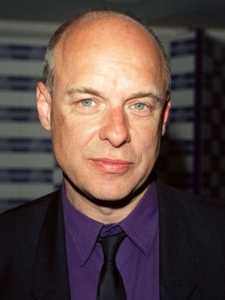
2- The Evolution of Talking Heads (American New Wave)
Collaboration with the New York band Talking Heads (on seminal albums such as More Songs About Buildings and Food, Fear of Music, and especially Remain in Light) is the most direct example of Eno’s influence.
Deconstruction and R-funk: With Remain in Light (1980), Eno and frontman David Byrne fused the British experimental approach with funk, African music (Fela Kuti’s Afrobeat), and manipulated recording techniques. They created a layered, rhythmic sound that defined American post-punk/art funk.
No Wave: He produced the seminal compilation No New York (1978), a key showcase for the New York No Wave movement, characterized by a raw, anti-commercial sound.
3- Electronica and Ambient
Eno’s invention of ambient provided the foundation for electronic and meditative genres that would find widespread acceptance in the US. His philosophy of “ambient” music has influenced generations of American artists, from minimalist composers to electronic and New Age producers.
Editorial and composition;
Gianni Pierantozzi

Leave a Reply
Want to join the discussion?Feel free to contribute!