
DARYL HALL & JOHN OATES: Dynamic Duo, Eternal Legacy… The True Origins of Blue Eyed Soul
DARYL HALL & JOHN OATES:
Dynamic Duo, Eternal Legacy…
The True Origins of Blue Eyed Soul
Artist Profile of Daryl Hall & John Oates
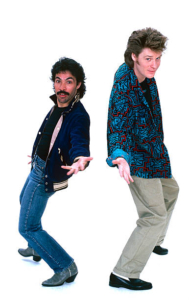
Daryl Hall & John Oates were the most successful musical duo in the history of American pop-rock music, renowned for their distinctive sound known as “blue-eyed soul,” which masterfully fused R&B, pop, rock, funk, and new wave.
Musical Origins and Formation
The Meeting
Daryl Franklin Hohl (later Hall) and John William Oates first met in 1967 in Philadelphia while both were attending Temple University. They were the leaders of rival bands competing in the same music competition. Due to a shooting that broke out during the event, they took refuge in the same elevator, discovering musical affinities and deciding to collaborate.
Philadelphia Context: Their music is rooted in Philadelphia’s rich soul and R&B tradition. Hall, in particular, was heavily influenced by artists such as Marvin Gaye and Curtis Mayfield and had worked as a session musician and producer for the Gamble and Huff label, the heart of the “Philly Soul” sound.
Early Style: Their first album, Whole Oats (1972), and subsequent works in the early 1970s featured a more acoustic and folk-rock sound, but they soon evolved into a more complex, rhythm and blues-oriented fusion. Success came with songs like Sara Smile and Rich Girl, the latter their first number one single (1977), which cemented their reputation as interpreters of “white soul”.
“Blue-Eyed Soul” and the Peak of Their Career
Their Artistic Formula
Their sound was an alchemical blend:
Daryl Hall: The lead voice, powerful and versatile, capable of ranging from the high notes of soul to more rock and pop tones. He was the melodic driving force and, often, the primary lyricist.
John Oates: The sideman and rhythmic element, guitarist and co-writer, crucial to their funk and R&B groove. Oates provided the solid foundation upon which Hall built his complex vocal lines.
The Golden Era (1980s): The duo reached the peak of their popularity in the early 1980s with albums such as Voices (1980), Private Eyes (1981), and H2O (1982). During this period, they embraced new wave and electronic production, while always maintaining a soul-funk heart. They had six number-one singles on the Billboard Hot 100, including timeless classics like “Kiss on My List,” “Private Eyes,” “I Can’t Go for That (No Can Do),” “Maneater,” and “Out of Touch.”
Innovation and Rhythm
Songs like “I Can’t Go for That (No Can Do),” with its distinctive synth bass and funk beat, not only dominated the pop and R&B charts (a rarity for a white duo at the time) but were also sampled by hip-hop and rap artists.
Influence on Subsequent Musical Trends
Hall & Oates not only defined radio-friendly pop in the 1980s, they also left a lasting legacy:
Connections between Pop and R&B/Soul: They pioneered the fusion of white pop with the rhythmic and vocal sensibilities of African-American soul and R&B. This “cross-fertilization” paved the way for many subsequent pop artists (such as George Michael, Justin Timberlake, and Maroon 5) who drew heavily on the vocabulary of soul and funk.
New Wave/Funk Aesthetic: They evolved their sound by integrating synthesizers, drum machines, and the energy of new wave into their R&B framework, creating a template for sophistication-pop and groove-oriented synth-pop.
Recognition of the Groove
Their insistence on groove and funk bass lines was celebrated by the music community. “I Can’t Go for That (No Can Do)” is considered a seminal track: its bass has been sampled by artists like De La Soul, and its structure has been imitated by countless producers.
The ’80s R&B and Pop Revival: In the 2000s and 2010s, artists like The Killers, Neon Trees, and the contemporary pop-rock scene often cited Hall & Oates as a direct influence for their ability to create catchy, sophisticated songs that maintain a rhythmic, melancholic core.
In short, Hall & Oates were more than a “hit machine”; they were a sonic laboratory that redefined the boundaries of American pop, proving that chart music could be simultaneously complex, soulful, and irresistibly catchy.
Editorial and composition:
Gianni Pierantozzi